Commercial restroom fixture upgrades help business owners in Hendersonville improve hygiene, save water, and cut plumbing problems. By choosing better toilets, urinals, faucets, and sinks, you can reduce clogs and leaks and keep hot water steady, all while giving guests a cleaner, more modern space.
Commercial restroom fixture upgrades help businesses create restrooms that look clean and feel safe. When owners replace worn toilets, urinals, faucets, and sinks with sturdy, efficient models, they can cut wasted water and lower stress on the plumbing system. Over time, that means fewer clogs, fewer leaks, and more reliable hot water in busy bathrooms.
A store manager who walks into a restroom sees what customers see. Stained toilets, dripping faucets, and chipped sinks send the wrong message, even if the rest of the building looks great. In many buildings around Hendersonville, the restroom gets heavy daily use but is one of the last areas to get an upgrade.
Table of Contents
- Why should businesses consider commercial restroom fixture upgrades?
- Which commercial restroom fixtures matter most for a professional image?
- How do you choose the right commercial toilets and urinals for your building?
- What should businesses look for in commercial faucets and sinks?
- How do plumbing codes and ADA requirements affect restroom fixture upgrades?
- What does the upgrade process for commercial restroom fixtures typically involve?
- How can businesses maximize long-term value from new restroom fixtures?
Why should businesses consider commercial restroom fixture upgrades?
Businesses should think about commercial restroom fixture upgrades because restrooms shape how people feel about the whole place. Modern fixtures are easier to keep clean, simpler to use, and more efficient. They also help control leaks, cut water damage risk, and lower the odds of plumbing trouble that can shut restrooms down.
Old toilets, urinals, and faucets often use more water than needed and clog more often. That means more drain cleaning calls, more time handling complaints, and more strain on the plumbing system. Over the years, this extra wear can lead to pipe damage, water heater stress, and a higher chance of hidden leaks behind walls or under floors.
How outdated fixtures affect impressions and staff satisfaction
Guests and staff judge restroom cleanliness by what they see and touch. Stained bowls, loose seats, slow drains, and dripping faucets signal that upkeep is behind. Even when a crew cleans often, worn or damaged fixtures can still look dirty and feel hard to use.
Staff notice this every day. A restroom that is easy to clean, with strong flush valves and touchless faucets, saves time for cleaning crews and cuts daily frustration. In offices, restaurants, schools, and medical spaces in Hendersonville, better restrooms help people feel that the owner cares about comfort and safety.
Operational and maintenance benefits of modern fixtures
Modern toilets, urinals, faucets, and sinks are built to use less water while still working well. Water-efficient toilets and urinals with the EPA’s WaterSense label are designed to lower flush volumes without hurting performance when installed with the right valves and piping.^watersense
Better fixtures can also reduce wear on commercial water heaters and drain lines. Fewer clogs and leaks mean fewer urgent calls for emergency plumbing and less risk of damage to walls, floors, and tenant spaces. Over several years, these day‑to‑day gains often matter more than the effort of the upgrade itself.
Which commercial restroom fixtures matter most for a professional image?
The fixtures people notice first in a restroom are the ones they use. Toilets, urinals, faucets, and sinks set the tone for the whole space. When those core fixtures look clean, work well, and feel solid, people assume the rest of the plumbing and building systems are in good shape too.
In busy commercial buildings, details like water pressure, flush strength, and drain speed shape the experience. A toilet that keeps running, a sink that splashes, or a faucet that is hard to turn on is annoying and adds extra cleaning work. When the basics work smoothly, guests spend less time in the restroom and walk out with a better impression.
Toilets, urinals, and partitions: core elements guests notice first
Commercial toilets and urinals must handle heavy traffic without constant service calls. Pressure‑assisted or flushometer toilets give strong, steady flushes, which helps limit repeat flushes and clogs. Solid partitions, well‑placed grab bars, and privacy screens also affect how safe and comfortable the room feels.
Urinals are a key part of men’s restrooms. Choices range from standard units to high‑efficiency and even waterless models. When matched with the right drains and vents, they can help control odors and reduce splashing. Durable, easy‑to‑clean partitions and hardware finish the setup by keeping each station private while still simple to wipe down.
Faucets, sinks, handwashing stations, and accessories that complete the space
Handwashing areas are where users face the mirror and take in the whole room. Modern handwashing stations with good‑sized sinks, smooth counters, and lined‑up soap and towel dispensers help keep water off the floor and keep lines moving. This is also where many people judge water temperature and pressure.
Touchless faucets and soap dispensers cut shared touch points and help manage how long the water runs. Sinks that are deep enough, with the faucet at the right height, help reduce splashing. Matching accessories such as grab bars, hooks, and baby changing stations add safety and ease of use, especially in family and accessible restrooms.
How do you choose the right commercial toilets and urinals for your building?
Choosing the right mix of toilets and urinals starts with how the restroom is used. A quiet office will have very different needs than a school, stadium, or busy restaurant in Hendersonville. Owners should think about traffic levels, user needs, water supply, drain layout, and long‑term upkeep when they pick fixtures.
The best mix of gravity toilets, pressure‑assisted toilets, and flushometer valves depends on the building’s plumbing design. A commercial plumber can look at pipe size, venting, and water pressure to help avoid weak flushes, loud operation, and recurring clogs.
Key decisions: flush valves, water efficiency, and performance
Flush valves control how much water moves through a toilet or urinal and how fast it flows. Many commercial fixtures use flushometer valves that mount on the wall, either exposed or behind a panel. These can be manual or sensor‑operated and must match the fixture’s rated flow to work well.
Water‑efficient toilets and urinals can lower total water use when they pair with the right valves and good piping. In some buildings, swapping old high‑volume toilets for modern models can reduce strain on the sewer or septic system. But going too low on flush volume in an older building may lead to drain issues, so owners need to balance savings with performance.
Accessibility, traffic volume, and layout considerations
Every commercial restroom must balance capacity with comfort and privacy. Large restrooms may need more toilets, urinals, and accessible stalls to handle peak times. Smaller spaces may need compact fixtures that still meet code clearances and feel comfortable to use.
Accessibility is more than a code box to check. It affects how people with wheelchairs, walkers, strollers, and other aids move through the space. Proper seat heights, clear turning areas, and well‑placed grab bars help lower the risk of falls and make the restroom easier for everyone to use.
A commercial plumber can help Hendersonville Plumber review fixture options and decide how many toilets and urinals each restroom needs. They can also advise where partitions should go and how to route drains so they tie into the main plumbing system with fewer future clogs or drain repair needs.
What should businesses look for in commercial faucets and sinks?
Businesses should look for faucets and sinks that are tough, simple to clean, and suited to daily use. A school, hospital, or busy shopping center restroom sees many quick handwashes each day. Those spaces need fixtures that stand up to constant use and make it easy for people to wash well without splashing water everywhere.
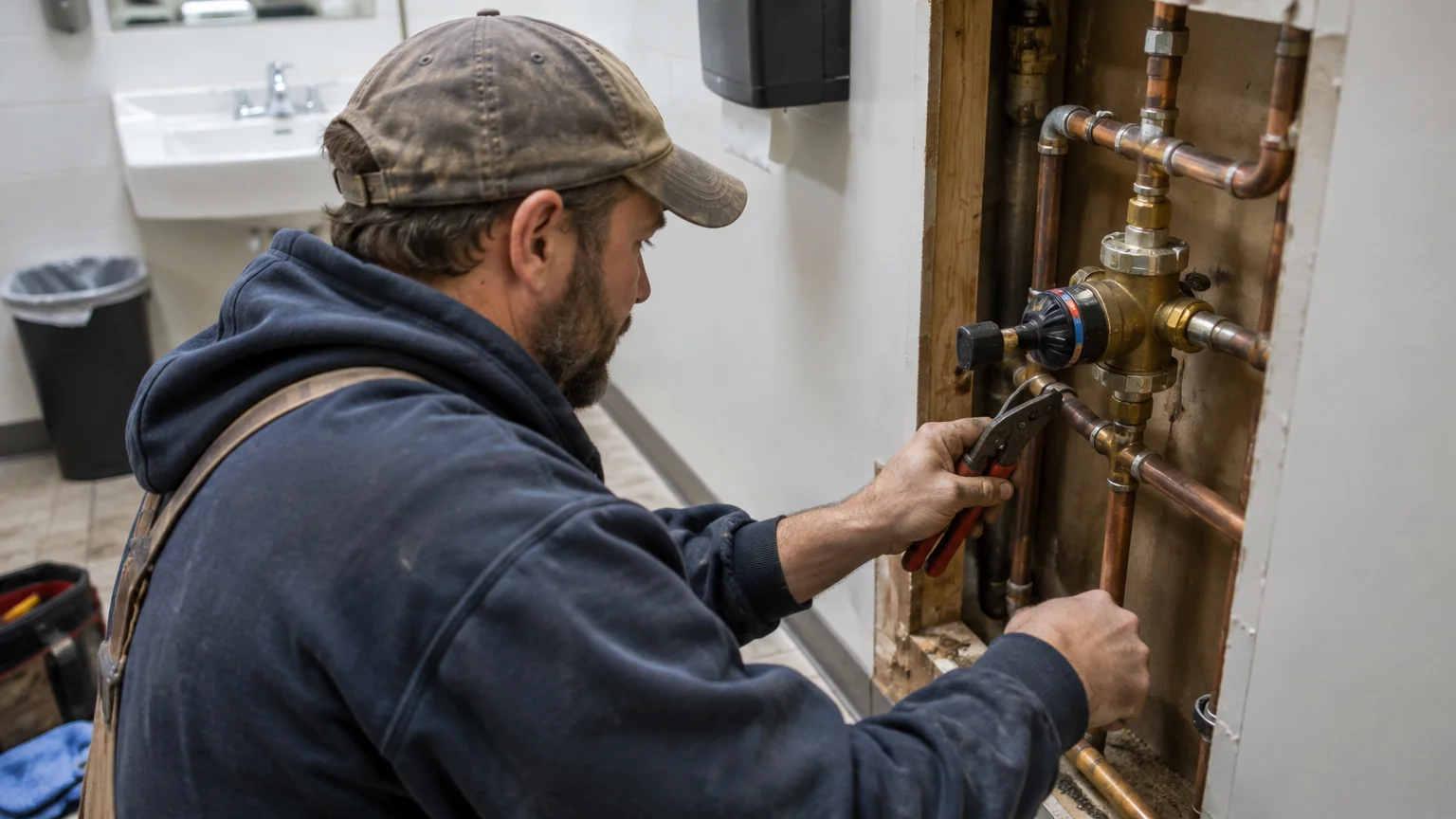
Owners should also think about how they control water temperature. A mixing valve blends hot and cold water to a safe level. A thermostatic mixing valve does this while holding the set temperature steady. These devices work with commercial water heaters to give stable hot water across several fixtures.
Touchless vs. manual faucets: hygiene, convenience, and durability
Touchless faucets use sensors to start and stop water when hands move under the spout. This cuts shared touch points and helps control how long the water runs. Many businesses pick touchless faucets in high‑traffic restrooms for both hygiene and water savings.
Manual faucets, like lever or wrist‑blade styles, still work well in many settings. They are often easier to service and do not depend on batteries or power for a sensor. For some buildings, a mix of touchless faucets in public restrooms and manual faucets in staff areas is a practical, balanced setup.
Sink sizes, materials, and mounting styles for different industries
Sink choice affects comfort and cleaning time. Deeper bowls help reduce splashing and work better in restrooms where people fill water bottles or rinse items. Wide trough‑style sinks with several faucets can be useful in schools, arenas, and other places that get crowd surges.
Common sink materials include vitreous china, solid surface, and stainless steel. Smooth, non‑porous surfaces help resist stains and make disinfection easier. Mounting styles include wall‑hung sinks, countertop drop‑in bowls, and integrated counters with built‑in basins. The right style depends on who uses the restroom and how often staff clean it.
In all cases, sinks and faucets should match the building’s water heater capacity. Hot water should reach each tap quickly without overloading the heater. This is especially important when restrooms share a commercial water heater with kitchen or laundry equipment.
How do plumbing codes and ADA requirements affect restroom fixture upgrades?
Plumbing codes and ADA rules set the basic standards for safe, usable restrooms. The Americans with Disabilities Act (ADA) is a law that explains how spaces must work for people with disabilities. These rules guide how many fixtures a building needs, where fixtures sit, how drains and vents are arranged, and how much clear space is needed for people using mobility aids.
Most areas use the International Plumbing Code or Uniform Plumbing Code, often with local changes made by the city or state. These codes define things like pipe size, venting, trap arm length, and backflow protection. A licensed commercial plumber checks all these details before and during a restroom upgrade.
Essential plumbing and building code issues to confirm before upgrading
Before changing fixtures, a plumber will look at the existing water supply, drain lines, vents, and shutoff valves. They confirm that pressure, temperature, and pipe sizing will support new toilets, urinals, and faucets without causing low water pressure, loud pipes, or new clogs.
They also check whether backflow protection is in place to help keep dirty water from reaching the drinking water supply. In some buildings, upgrades may also trigger fire, ventilation, or structural checks under the building code.
Many commercial restroom projects need permits. Inspectors may want to see rough‑in plumbing before walls close up, and then do a final inspection once all fixtures are installed and drains are tested.
Meeting ADA accessibility standards for toilets, sinks, and clearances
The ADA sets detailed rules for accessible restrooms, such as clear floor space, reach ranges, grab bar placement, and fixture heights.^ada Restroom upgrades must keep or improve accessibility, not make it worse.
For toilets, this includes correct seat height, centerline distance from the wall, and enough space beside the toilet for a wheelchair transfer. For sinks, it includes open knee clearance, proper counter height, and the ability to reach faucets and soap without strain.
Door swings, handles, mirrors, and accessories also matter. A commercial plumber working in North Carolina should coordinate with designers or accessibility consultants to be sure new fixtures and layouts stay within ADA and local accessibility rules.
What does the upgrade process for commercial restroom fixtures typically involve?
The upgrade process for commercial restroom fixtures usually starts with an assessment and ends with final testing and cleanup. Along the way, the owner, plumber, and sometimes a designer decide which fixtures to keep, which to replace, and whether piping or water heaters need changes to support the new setup.
The exact steps depend on the age of the building, the number of restrooms, and whether the space can close during work. Some projects can be done one restroom at a time to keep others open. Others, such as full remodels in office towers or shopping centers, need tight schedules and careful planning.
Planning, assessment, and selecting the right commercial plumber
A commercial plumber starts by walking the space and checking current fixtures. They look at shutoff valves, risers, main drains, and the commercial water heaters. They may open ceiling tiles or access panels to see how pipes run between floors.
Together with the owner or property manager, they talk through goals. These may include a better image, more water savings, fewer clogs, improved accessibility, or all of these. From there, they suggest fixture brands, flush valves, faucet types, and layout changes that fit the building and how people use it.
Choosing the right plumber means checking for proper licensing, insurance, and experience with commercial plumbing and ADA‑compliant restroom upgrades. For complex jobs that involve gas‑fired water heaters or boiler systems, it may also mean working with a gas line plumbing specialist.
Scheduling work, minimizing downtime, and coordinating other trades
Once fixtures and scope are set, the team agrees on timing. Work often happens during off‑hours, overnight, or on weekends to limit downtime. In some buildings, crews shut down one restroom stack at a time so people always have access to at least one working restroom.
Commercial restroom projects often need help from other trades. These may include electricians for lighting and hand dryers, carpenters for partitions and framing, and tile or flooring installers. A clear plan helps avoid delays, missed steps, and extra change orders.
During the final stage, the plumber tests every toilet, urinal, faucet, and drain for leaks and correct operation. They confirm that toilets do not keep running and that water shuts off fully at each faucet. Any issues get fixed before the restroom reopens to guests or staff.
Frequently Asked Questions
How often should a commercial restroom be upgraded?
Many commercial restrooms get a refresh about every decade, but actual timing depends on traffic and wear. Owners should think about upgrades sooner if fixtures clog often, leak, look badly worn, or no longer meet code or ADA rules. A quick plumbing inspection can help pick the right time.
What causes low water pressure in commercial bathrooms?
Low water pressure can come from undersized piping, clogged supply lines, partly closed valves, failing pressure regulators, or issues with the building’s main supply. Old galvanized pipes can also restrict flow. A plumber will test pressure at several points and trace the problem back to the most likely source.
Why does a toilet keep running in a commercial restroom?
A toilet that keeps running usually has a problem with the flush valve, flapper, or fill valve. Worn seals or mis‑set parts let water keep flowing from the tank or flushometer into the bowl. This wastes water and can stress the plumbing, so it should be fixed quickly by cleaning or replacing parts.
Can businesses safely handle any restroom repairs themselves?
Staff can safely do small tasks like tightening loose seats, cleaning faucet aerators, clearing surface clogs with a plunger, and checking for visible leaks. Anything that needs opening walls, changing valves, working on gas or electric water heater settings, or cutting into pipes should be left to a licensed commercial plumber.
Do commercial restroom upgrades affect the water heater?
Yes. New fixtures can change how much hot water is used at once and how fast it is needed. Low‑flow faucets and efficient toilets may lower total demand, but extra restrooms or new showers can raise it. A plumber will compare fixture counts to the commercial water heaters on site to confirm they can keep up.
How can businesses maximize long-term value from new restroom fixtures?
Businesses can get the most value from new restroom fixtures by pairing good products with steady care. Simple, regular checks help keep fixtures looking new, prevent leaks, and support even hot water delivery to all handwashing stations and showers that share the same system.
Clear cleaning plans, quick repairs, and regular checks of valves and seals do more for fixture life than any fancy feature. A little attention each month goes a long way and lowers the odds of surprise clogs, drain repair needs, or emergency plumbing calls later.
Key takeaways
Smart maintenance habits make a big difference. Simple steps include:
- Walkthrough checks to look for drips, slow drains, or toilets that keep running.
- Cleaning aerators and strainers on faucets and shower heads to keep water flow even.
- Listening for hissing or running water when restrooms are empty, which can point to hidden leaks.
- Checking water heater settings so temperatures stay safe and stable at all fixtures.
Water and energy‑saving strategies also matter. WaterSense‑labeled fixtures, good occupancy sensors, and timed flush valves can all help reduce wasted water.^watersense2 Insulating hot water lines and pairing fixtures with the right commercial water heaters can help hot water arrive faster and cut heat loss.
Conclusion
Commercial restroom fixture upgrades are about more than looks. They help protect the building, support comfort for staff and visitors, and work with the commercial water heater and drain system to reduce clogs and plumbing stress. Thoughtful choices in toilets, urinals, faucets, and sinks can lower water use while still giving strong, reliable performance in Hendersonville businesses.
For property owners and managers in the Hendersonville area, working with an experienced commercial plumbing team like Hendersonville Plumber keeps the process on track from planning to final testing. To review options for your building or plan a phased upgrade that fits your schedule, Contact us and talk with Hendersonville Plumber about commercial restroom solutions that fit your needs.
[^watersense]: EPA WaterSense is a voluntary program that helps identify water-efficient products.
[^ada]: The U.S. Department of Justice publishes the 2010 ADA Standards for Accessible Design.
[^watersense2]: The EPA provides WaterSense guidance for commercial buildings and facilities.
If you are not sure what you are dealing with, it is worth having someone look at it before it turns into a bigger job. Get in touch with Hendersonville Plumber today and we will tell you where you stand.