How plumbers find gas leaks starts with safety and careful testing. A licensed plumber checks the home, shuts off gas when safe, and uses approved tools. These tools can find leaks near appliances, valves, joints, and hidden pipes. The plumber then confirms the source, makes the repair, and tests the system before use.
A gas leak can cause fire, an explosion, or serious illness. Anyone who smells rotten eggs, hears hissing, or feels sick should leave the area. The steps below explain what trained plumbers do and what people should do first.
Table of Contents
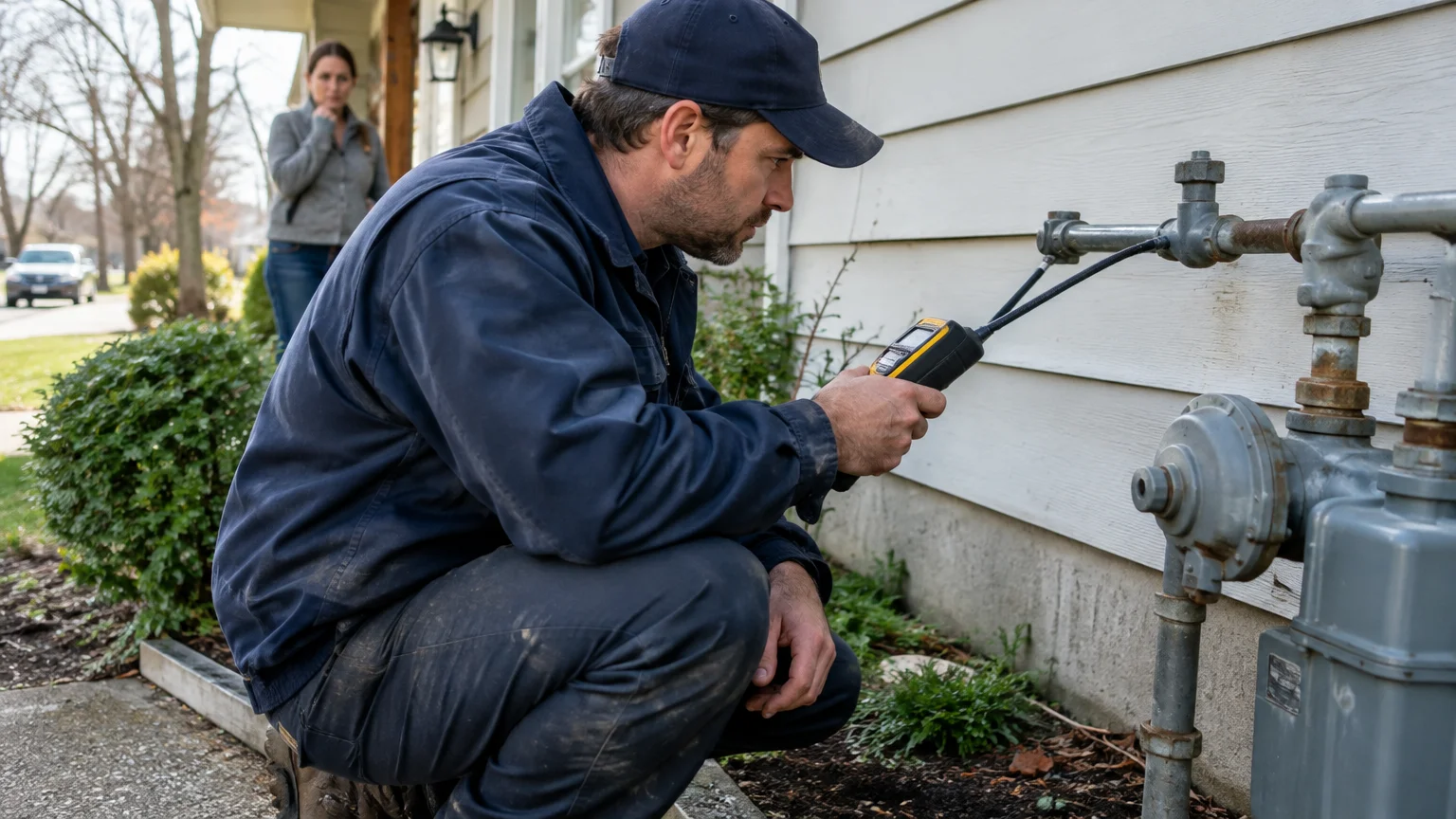
- How do plumbers find gas leaks in a home?
- What tools do plumbers use to detect gas leaks?
- What steps does a plumber take during gas leak detection?
- Where do gas leaks commonly occur in a house?
- What should you do if you suspect a gas leak?
- How do plumbers repair and verify a gas leak?
- When should you call an emergency plumber for a gas leak?
How do plumbers find gas leaks in a home?
Plumbers find gas leaks by checking the system in small sections. They use their senses first, then use tools that measure gas or pressure. A trained plumber does not depend on smell alone. Odor can fade, move through rooms, or come from another place.
Why gas leak detection requires professional equipment
Natural gas and propane can burn when mixed with air. A combustible gas detector measures gas near pipes, fittings, and appliances. A pressure test checks whether a closed gas system holds pressure. Together, these tests help the plumber find the source.
Gas work also needs care around flames, switches, motors, and other spark sources. If you smell gas or suspect a leak, leave right away. Do not test the area with a lighter, match, phone, or electrical device.
How plumbers assess the property before testing
The plumber first asks what people noticed. Helpful details include a rotten-egg smell, a hissing sound, a pilot light problem, or dizziness. The plumber also checks which appliances use gas and whether recent work changed the system.
Hendersonville Plumber helps property owners understand when a gas concern needs urgent care. The inspection may include the furnace, range, water heater, fireplace, outside equipment, shutoff valves, and visible supply lines. The plumber then chooses a safe test plan.
What tools do plumbers use to detect gas leaks?
Plumbers use more than one tool because each test gives different information. Electronic detectors find gas in the air. Pressure tests show whether gas piping loses pressure. An approved leak detection solution can help confirm a leak at an exposed connection.
Electronic combustible gas detectors
An electronic combustible gas detector senses flammable gas near a possible leak. The plumber moves it slowly around appliance connections, valves, unions, and pipe joints. The readings can guide the search when a leak is small or hidden behind a cabinet.
The detector does not replace a full inspection. Air movement can carry gas away from its source. Readings can also change when a burner, vent, or appliance runs. The plumber compares readings and checks the system in a careful order.
Pressure testing and gas-rated leak detection solution
A pressure test seals part of the system and checks whether it keeps pressure during the test. A pressure drop shows that gas may be escaping. It may not show the exact location. The plumber can then separate sections and inspect visible connections.
For exposed fittings, an approved gas leak solution may form bubbles where gas escapes. This can help confirm a suspected point. Household soap should not replace an approved product or professional testing. Older fittings and sensitive equipment need extra care.
What steps does a plumber take during gas leak detection?
A plumber first makes the area safer. The exact order depends on the smell, gas reading, building layout, and fuel type. Work must stop if the area creates an immediate danger to people or workers.
Isolating appliances, fittings, and gas lines
The plumber may shut off the building supply or an appliance valve when it is safe. This limits the gas entering the space. The plumber also keeps spark sources away. The area may be aired out only when that can happen safely.
Next, the plumber divides the system into sections. This can show whether the problem is near one appliance or within one branch of the piping. A homeowner should not turn a valve back on after a utility worker or emergency responder shuts it off.
Confirming the leak source and checking nearby connections
The plumber checks the suspected fitting, connector, valve, and nearby pipe. A loose connection may be easy to see. Corrosion or damage may need closer testing. The plumber also checks for movement, poor support, heat damage, and bad installation.
The first place where a detector responds is not always the source. Gas can travel through cabinets, wall spaces, and floor openings. A skilled plumber traces the system instead of replacing the first part that seems suspicious.
Where do gas leaks commonly occur in a house?
Gas leaks often occur at connections, valves, flexible connectors, and damaged pipe sections. The risk rises when parts are old, moved, rusty, or installed poorly. A leak can also occur after an appliance moves and pulls on its connection.
Appliance connections, valves, and flexible connectors
Common points include a range connector, water heater connection, furnace shutoff valve, and fireplace fitting. Flexible connectors can be damaged if bent, pinched, stretched, or exposed to heat. Moving an appliance during cleaning or remodeling can also stress a connection.
A homeowner may look for visible damage without touching the fitting. Do not tighten a gas connection, remove a connector, or test it with a flame. Any smell or hissing near an appliance calls for immediate caution and professional help.
Pipes, joints, and concealed gas lines
Gas piping may leak at threaded joints, unions, valves, or areas affected by rust or impact. Concealed lines can be harder to check. The source may be inside a wall, crawl space, or floor. Other warning signs include a recurring odor or a detector reading in one area.
These signs do not prove a leak. They do show why the system needs a proper check. Hendersonville Plumber serves owners and tenants with questions about leaks, burst pipes, water heater issues, and urgent plumbing concerns, Downtown Hendersonville, Laurel Park, Flat Rock, Fletcher, Mills River, Etowah, and nearby communities.
What should you do if you suspect a gas leak?
Leave quickly and avoid anything that could create a spark. Do not use light switches, phones, appliances, matches, or vehicles near the suspected leak. Once safely away, call 911 or the gas utility when needed. Then arrange professional plumbing help.
Immediate safety steps for occupants
The safest first actions are simple:
- Move people and pets outside without searching for the leak.
- Avoid flames, switches, plugs, vehicles, and powered equipment.
- Do not smoke, use a flashlight, or operate a phone inside.
- Call emergency services or the gas utility from a safe place.
- Do not return until the proper authority says the property is safe.
Do not open windows or doors if doing so means moving toward the smell or touching a switch. Do not shut off the main gas valve unless it is outside, easy to reach, and the utility gives clear instructions. Safety comes before saving belongings.
When to leave the property and call emergency services
Leave at once when the smell is strong, a hissing sound is present, or anyone feels ill. A visible fire, damaged gas line, or leak near an ignition source needs emergency services. The gas utility may need to make the area safe before a plumber starts repairs.
Even a mild or uncertain odor deserves attention. Odor can travel through a building and may not be strongest at the source. Never ignore a smell just because it fades.
How do plumbers repair and verify a gas leak?
A plumber repairs the failed part after the source is confirmed and the system is safe. The repair may involve a fitting, valve, connector, appliance part, or section of approved gas piping. The right repair depends on the damage, access, pipe type, and local rules.
Repairing or replacing faulty gas components
A plumber may replace a damaged connector, valve, joint, or pipe section. Some parts can be repaired, while others should be replaced. The plumber also checks supports, clearances, shutoff access, and nearby appliance connections.
Do not patch gas piping with tape, sealant, or makeshift parts. Products made for water pipes are not always safe for fuel gas. A licensed professional can choose approved materials and complete work that meets local rules.
Testing the system after the repair
After the repair, the plumber tests the affected section and may test the full system. The test can include pressure checks, detector readings, and a close look at repaired connections. The plumber also checks that appliances work safely.
A repair is not complete just because the smell fades. Gas may remain in a closed space. An appliance may also have a separate fault. The plumber should explain what was found, what was fixed, and whether another qualified authority must restore service.
When should you call an emergency plumber for a gas leak?
An emergency plumber should be called after occupants reach safety and emergency services or the gas utility have been contacted as needed. Urgent signs include a strong odor, hissing, a damaged line, repeated detector alarms, or a leak near a gas appliance.
Warning signs that require immediate professional help
A homeowner should treat these signs seriously:
- A rotten-egg odor that returns or grows stronger.
- Hissing near a pipe, appliance, valve, or wall.
- A gas detector alarm or unexplained pressure loss.
- Flames that look unusual or keep going out.
- Dizziness, nausea, headache, or breathing trouble indoors.
- Physical damage to a gas line or appliance connector.
A gas leak is not a routine plumbing repair. A homeowner may safely handle simple upkeep, such as cleaning drains or watching for clogs. Gas leak testing and repair need trained help. DIY testing with a flame is never safe.
What homeowners should ask before work begins
After the property is safe, ask what part failed and what test confirmed the leak. Ask what repair is needed and whether the work requires an inspection, permit, utility release, or another licensed trade. The final cost is confirmed on a quote and may depend on parts, access, damage, and urgency.
Hendersonville Plumber provides emergency plumbing guidance for homes, businesses, and nearby communities. Routine drain cleaning, drain repair, or help with clogs is different from an active gas emergency and should never delay evacuation. Property owners in Hendersonville can seek help once the area is safe.
Key takeaways
- Gas leak detection should use professional tools, not a flame.
- Leave at once when there is a strong odor, hissing, or illness.
- Call emergency services or the gas utility from a safe location.
- Plumbers use detectors, pressure tests, and close connection checks.
- A repaired gas system must be tested before normal use.
Frequently Asked Questions
Can a homeowner find a gas leak without a detector?
A homeowner may notice an odor, hissing, or appliance problem. These signs do not safely locate a leak. Leave and call for help instead of searching indoors. A trained plumber uses approved tools and controlled tests after the area is safe.
What does a gas leak smell like?
Natural gas is often given a strong smell like rotten eggs. The smell may be faint, strong, or uneven because air can move gas through rooms and walls. Treat any unexplained gas odor as a warning, even when it soon disappears.
Can a gas leak come from a water heater?
Yes. A water heater can have a problem at its shutoff valve, connector, control area, or nearby gas piping. A pilot issue or damaged connection can also cause concern. Leave if gas is suspected, and do not relight the appliance until a qualified professional checks it.
How long does gas leak detection take?
The time depends on the building size, number of appliances, access to piping, and whether the leak is visible. An exposed connection may be confirmed quickly. A leak inside a wall, crawl space, or long pipe branch may need more careful testing.
Is a gas leak always an emergency?
A suspected active gas leak should be treated as urgent. Gas can ignite and harm people. A strong smell, hissing, physical damage, or illness requires evacuation and emergency contact. Even an uncertain odor needs prompt advice, not home testing or delay.
If you are unsure what you are dealing with, Contact us today for professional guidance from Hendersonville Plumber.
If you are not sure what you are dealing with, it is worth having someone look at it before it turns into a bigger job. Get in touch with Hendersonville Plumber today and we will tell you where you stand.